
 Save
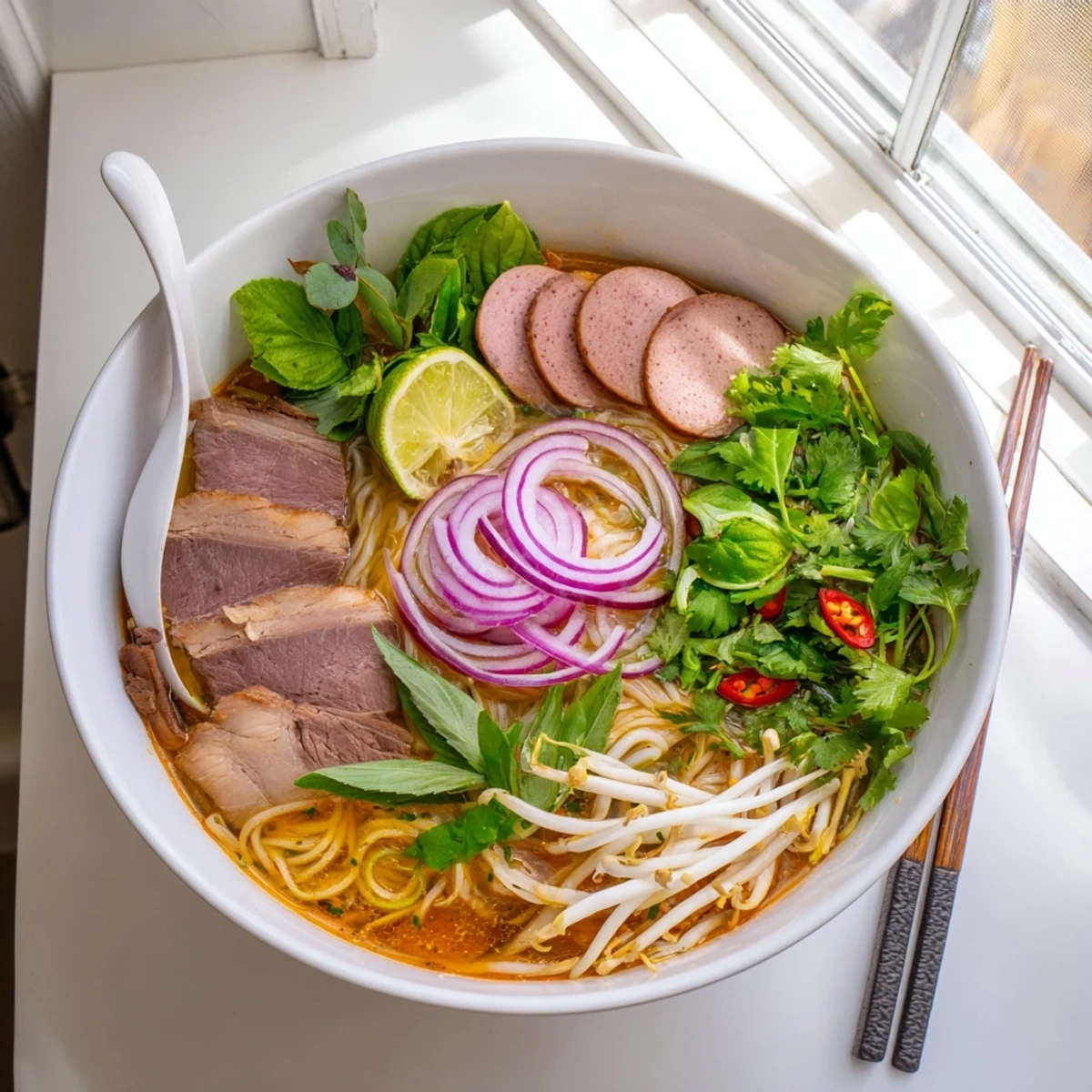
Save Bun Bo Hue brings the vibrant cuisine of central Vietnam to your kitchen with its signature spicy and aromatic broth. This beloved noodle dish features a rich beef and pork stock infused with bruised lemongrass, shrimp paste, and rock sugar, simmered slowly to develop deep umami flavors. The soup gets its distinctive reddish hue and heat from aromatic chili oil made with annatto seeds and fresh chili flakes. Thick round rice noodles provide the perfect base for tender beef shank, pork hock, and traditional Vietnamese sausage. Fresh herbs like mint, Thai basil, and cilantro add brightness, while lime wedges offer a tangy finish. Each bowl balances spicy, savory, and refreshing elements in perfect harmony.
The first time I had Bun Bo Hue was at a tiny family-run spot where the owner kept refilling my bowl without asking, her eyes watching eagerly for my reaction. That broth hit differently than pho sharper, more demanding, with a heat that made my nose tingle and flavors that felt like they were arguing in the best possible way. I went back three times that week, trying to decode what made it so addictive.
My friend Linh taught me that the shrimp paste is non-negotiable, no matter how weird it smells in the jar. She laughed watching me hold my breath the first time I added it, but then refused to eat my batch until I confessedId doubled the amount. Now I understand its the secret weapon that makes people ask whats in this soup.
Ingredients
- Beef shank and pork hock: These tough cuts need the long simmer to become meltingly tender and theyre what gives the broth its body
- Lemongrass: Bruise it hard with your knife back to release those citrusy oils that define Hues cuisine
- Shrimp paste: Dont skip it, it smells funky straight from the jar but transforms into something incredible in the broth
- Thick rice noodles: Bun Bo Hue noodles are round and hearty, perfect for standing up to this bold soup
- Annatto seeds: They give the broth that signature red-orange color without adding much flavor
- Fresh herbs: The pile of mint, cilantro and Thai basil at the end cuts through the richness like magic
Instructions
- Build the foundation:
- Blanch the beef shank and pork hock in boiling water for five minutes, then rinse everything thoroughly and start fresh with clean water to get that crystal clear broth
- Simmer slow and low:
- Add your bruised lemongrass, halved onion, smashed garlic and ginger to the pot, then let it bubble gently for two hours while your kitchen fills with the most incredible aroma
- Season boldly:
- Stir in the fish sauce, salt, both sugars and that crucial shrimp paste, then taste and adjust because this soup needs to punch you in the best way
- Make the magic oil:
- Heat oil with annatto seeds until they turn your oil brilliant red, then cook down shallots and garlic before hitting it with chili flakes for that signature kick
- Prep your proteins:
- Cook the noodles until theyre just right, slice your meats thin, and simmer those blood cubes gently if youre going full traditional
- Bring it together:
- Pile noodles into bowls, arrange all your meats on top, then ladle that steaming broth over everything and finish with a drizzle of your red chili oil
- Finish like you mean it:
- Crowd each bowl with red onion, bean sprouts, banana blossom and an absurd amount of fresh herbs, then squeeze lime over everything right before diving in
 Save
Save Last winter I made a giant pot during a snowstorm and my neighbors kept finding reasons to stop by, somehow knowing exactly when Id be ladling bowls. Theres something about this soup that pulls people to the table faster than anything else I cook.
Getting The Broth Right
I learned the hard way that rushing the broth by turning up the heat makes it cloudy and less flavorful. Keep it at a gentle simmer and youll taste the difference in every spoonful.
Noodle Game Strong
Overcooked noodles are the saddest thing in this dish. Pull them a minute early because they keep cooking in that hot broth and nobody likes mushy noodles with their perfect soup.
Build Your Bowl
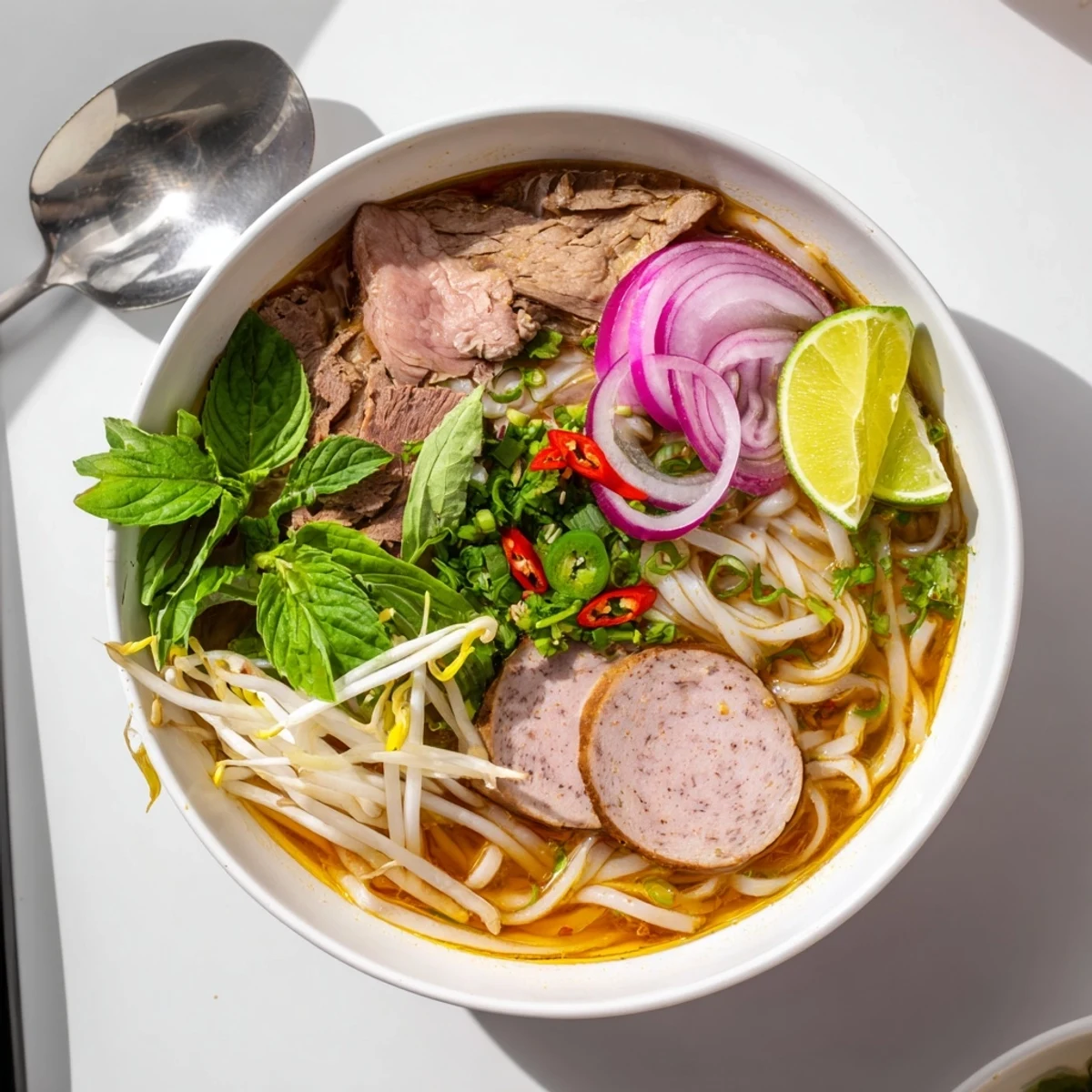
The real secret is arranging all your toppings in the bowl before pouring the broth, that way everything gets hot evenly and the presentation looks stunning every single time.
- Put your lime wedges on the side so guests can control the acidity
- Extra chili oil on the table lets heat lovers add more to their hearts content
- Fresh herbs should go in last so they stay bright and perky
 Save
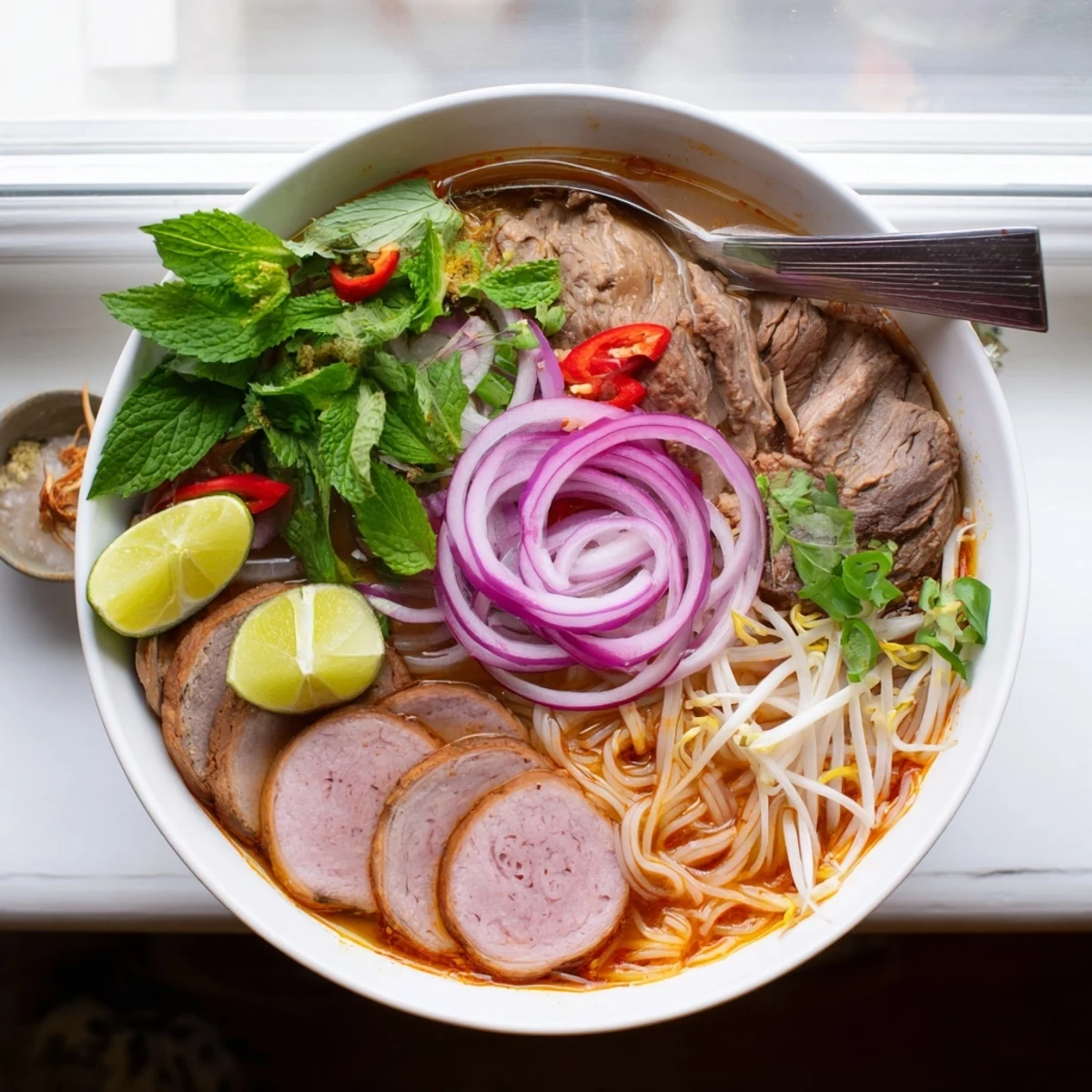
Save Theres nothing quite like watching friends customize their bowls, debating how much lime to squeeze or whether to add more heat, and then seeing that first perfect spoonful disappear.
Common Recipe Questions
- → What makes Bun Bo Hue different from pho?
-
Bun Bo Hue originates from central Vietnam and features a spicier, more complex broth with lemongrass and shrimp paste, while pho has a milder, anise-scented broth. The noodles are also thicker and rounder compared to pho's flat rice noodles.
- → Can I make this less spicy?
-
Absolutely. Reduce the chili flakes in the aromatic oil and serve additional chili on the side for those who prefer more heat. The base broth itself has minimal spice.
- → Is shrimp paste necessary for authentic flavor?
-
Shrimp paste (mam ruoc) is essential for the characteristic depth of Bun Bo Hue. It adds umami without overwhelming seafood flavor. Look for it in Asian markets or substitute with extra fish sauce.
- → What cut of beef works best?
-
Beef shank with bone is traditional, as it renders collagen-rich broth and becomes tender during long simmering. Brisket or flank work well as additional proteins for serving.
- → Can I prepare the broth in advance?
-
Yes, the broth actually improves after resting overnight in the refrigerator. Simply skim any solidified fat before reheating. Cook noodles fresh when serving to maintain texture.