
 Save
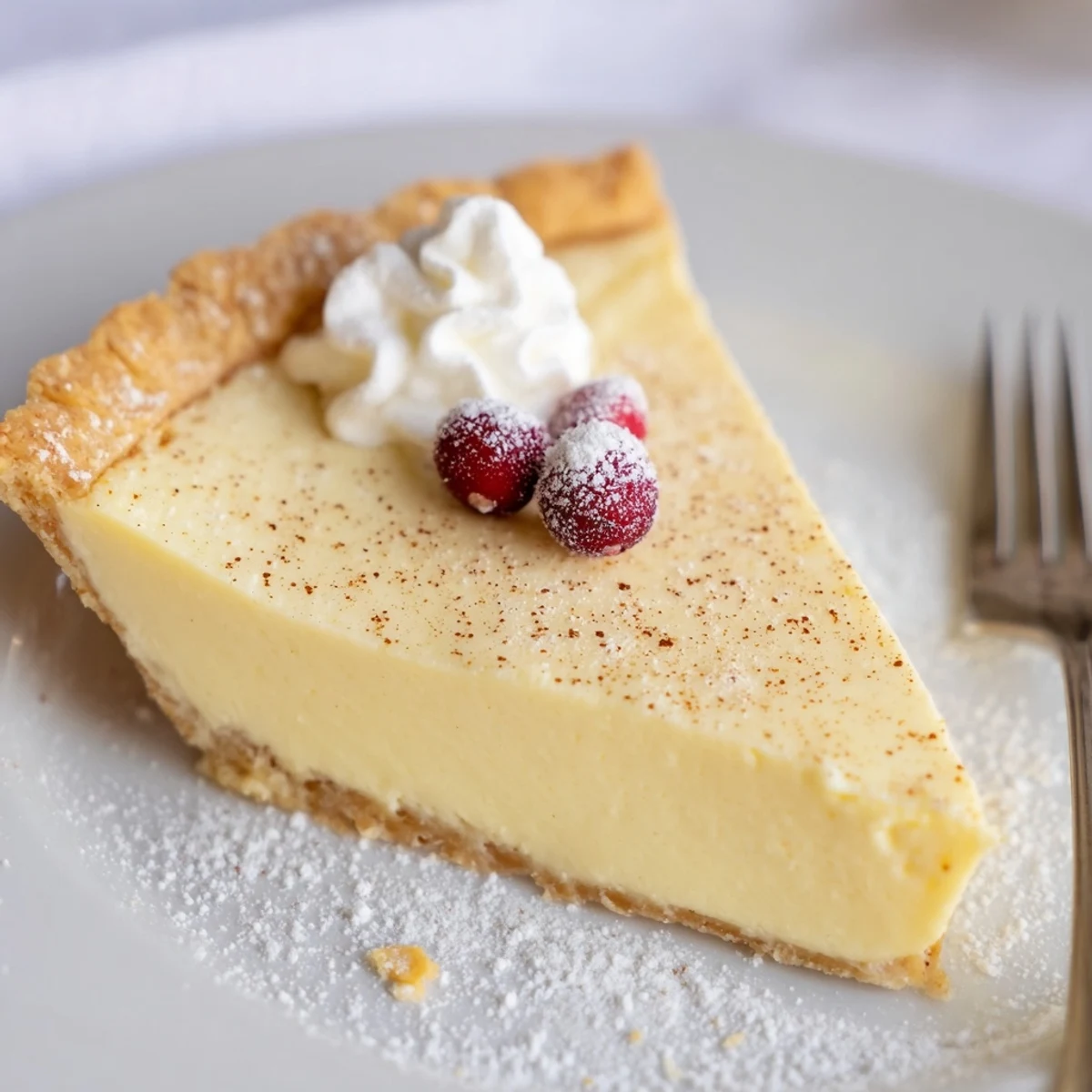
Save This custard combines whole milk, heavy cream, eggs, sugar and cornstarch, gently tempered with warm milk and scented with vanilla and cinnamon. The silky filling is strained and poured into an unbaked 9-inch crust, baked until just set, then chilled to finish. Serve lightly dusted with cinnamon or powdered sugar, or top with sugared cranberries or whipped cream for festive flair.
The scent of cinnamon and vanilla drifting from my kitchen always signals that something comforting is on its way, but nothing invites celebration quite like this Christmas Eve custard pie. One winter, as sleet tapped on my window, I found myself humming carols and realizing that custard pie smells exactly like anticipation and joy. The first bite I snuck—far too hot, I admit—taught me that sometimes patience is the last and hardest ingredient. There’s a quiet contentment to whisking eggs and sugar while the world is hush outside.
I whipped up this pie for my neighbor’s impromptu Christmas Eve potluck, running across the hall with it still warm and a little lopsided. We all huddled in the kitchen, swapping stories as it cooled, and I still remember the way everyone went blissfully silent with their first forkful. No one mentioned the awkward crimp on my crust—just the soft custard and gentle spice. In that moment, it was not just pie, but a sweet glue for friends and laughter.
Ingredients
- Unbaked pie crust (9 inch): Prepping your crust well means an even bake and no soggy bottom—homemade is a treat, but store-bought works in a pinch.
- Whole milk: The base of that classic custard flavor; room temperature helps it blend with the eggs.
- Heavy cream: Brings velvetiness—don’t skip it, or the texture won’t melt on your tongue the same way.
- Large eggs: Fresh eggs yield a custard that sets perfectly and tastes brighter.
- Granulated sugar: Not just sweetener—whisking sugar with eggs helps prevent curdling.
- Cornstarch: My assurance for a stable but delicate custard, especially when a crowded kitchen means opening the oven often.
- Vanilla extract: I always pour it over the eggs so I can inhale that warmth right before whisking.
- Ground cinnamon: Sprinkle for both cozy aroma and subtle earthiness; buy a fresh tin each December if you can.
- Fine sea salt: Just enough to brighten every flavor and keep the sweetness in balance.
- Powdered sugar (optional): For that snowy finish—sifted lightly at the last minute.
Instructions
- Prep the pie shell:
- Set your crust into a 9 inch pie pan and press the edges with a fork or finger—there’s no wrong way to crimp if you’re having fun with it.
- Warm the dairy:
- Heat milk and cream together in a saucepan on medium until they barely steam, careful not to let them bubble; your kitchen will start to smell dreamy already.
- Mix the custard base:
- Whisk eggs, sugar, cornstarch, vanilla, cinnamon, and salt in a large bowl till smooth and pale, letting your wrist get a little workout.
- Combine and temper:
- Pour in the warm milk mixture slowly, whisking the whole time—you want to blend, not cook, the eggs.
- Strain for smoothness:
- Push the custard through a fine-mesh sieve; it’s a quick step that makes all the difference.
- Fill and bake:
- Pour the custard into the crust, slide into the oven, and bake 45-50 minutes until just set but a little jiggly in the center; tent the crust edges with foil if they color too fast.
- Cool and finish:
- Cool the pie on a wire rack—admire that gentle wobble, knowing it’ll set as it rests.
- Decorate and chill:
- Just before serving, dust with extra cinnamon and powdered sugar if you like, then chill for at least 2 hours before slicing—the hardest wait.
 Save
Save Preparing this pie for a cold, festive night, I looked up to see my youngest, nose pressed to the oven glass, whispering countdowns to the timer. It’s a dish that turns waiting into celebration, and sometimes those golden moments are sweeter than the dessert itself.
Pie Crust Pinch Hitter
On busy days, using a store-bought crust has saved my sanity and never once drew complaints—especially when I focused on nailing the filling. If you opt for frozen dough, let it thaw until pliable so it fits the pan smoothly without cracks or frustration.
Custard Confidence Tricks
Slow, steady whisking is your ally—the first few times I made custard, I anxiously peeked in the oven every five minutes. Relax: once you see the slight wobble and the center isn’t liquid, you’re golden. Let it cool fully, even if the cinnamon scent has you circling the kitchen.
Making It Your Own, Festive-Style
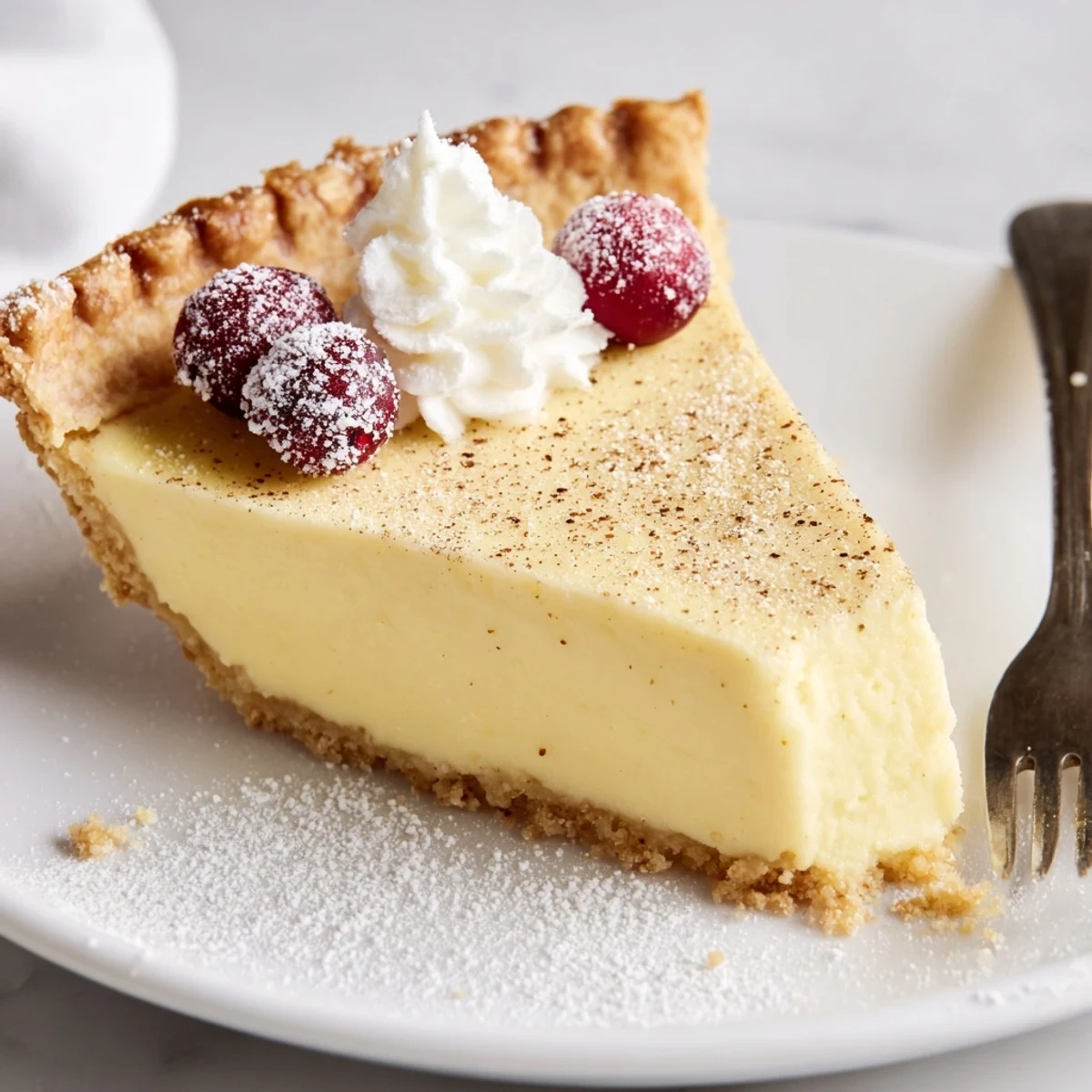
I’ve added a glug of bourbon for grown-up warmth or topped the pie with sugared cranberries when I wanted an extra pop of color. Swapping nutmeg for cinnamon lets you tweak the holiday vibe with just a pinch here or there.
- Let guests dust their own slices with powdered sugar—it doubles as interactive fun.
- Tent foil loosely over the crust if your oven tends to brown edges too fast.
- Don’t worry if the top gets tiny bubbles—it’ll still taste dreamy.
 Save
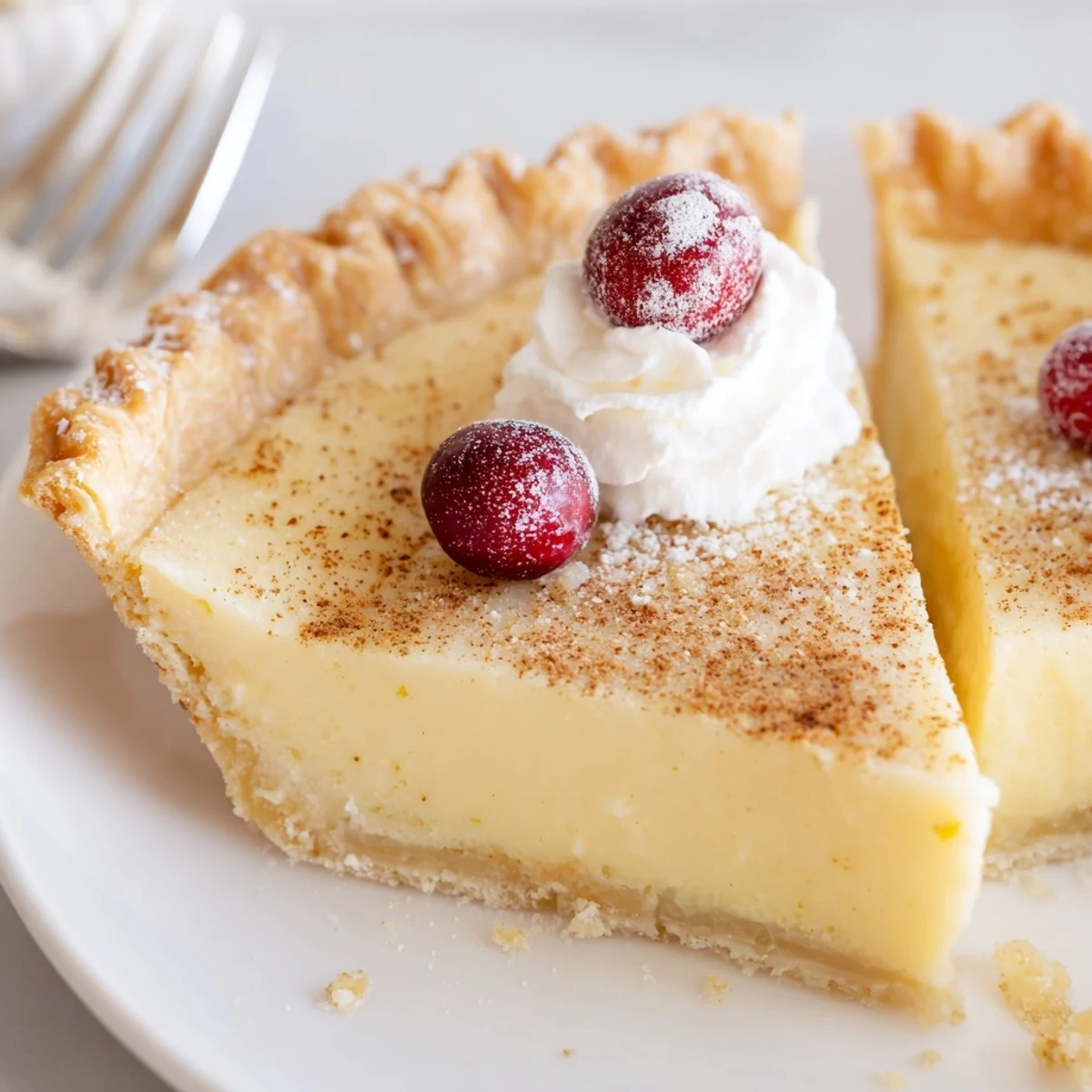
Save This custard pie has become the gentle punctuation mark at the end of more than one Christmas Eve. May it bring laughter to your kitchen and a little extra magic to the night.
Common Recipe Questions
- → How do I avoid a curdled or grainy texture?
-
Temper the eggs by slowly whisking in the warm milk mixture to prevent curdling, heat gently without boiling, and strain the filling through a fine-mesh sieve before pouring into the crust for a smooth finish.
- → How can I tell when the custard is done?
-
Bake until the edges are set and the center remains slightly wobbly; it will firm as it cools. A clean knife near the center should show moist custard but not liquid.
- → Should I prebake the crust or use an unbaked crust?
-
A blind-baked crust yields a crisper base, while an unbaked crust works fine if the filling bakes evenly. If edges brown too quickly, tent with foil to prevent overbrowning.
- → Will adding alcohol affect the texture?
-
A splash of bourbon or brandy (about 1–2 tbsp) adds depth of flavor but can slightly soften the set; use sparingly and incorporate it evenly after tempering the eggs.
- → How do I ensure the custard is silky?
-
Use a fine-mesh sieve to remove any solids, include a bit of cornstarch for stability, warm the dairy slowly, and chill thoroughly before slicing to achieve a smooth, creamy texture.
- → How should leftovers be stored?
-
Cover and refrigerate for up to 3 days. Keep chilled and serve cold; reheating is not recommended as it may break the custard's texture.