
 Save
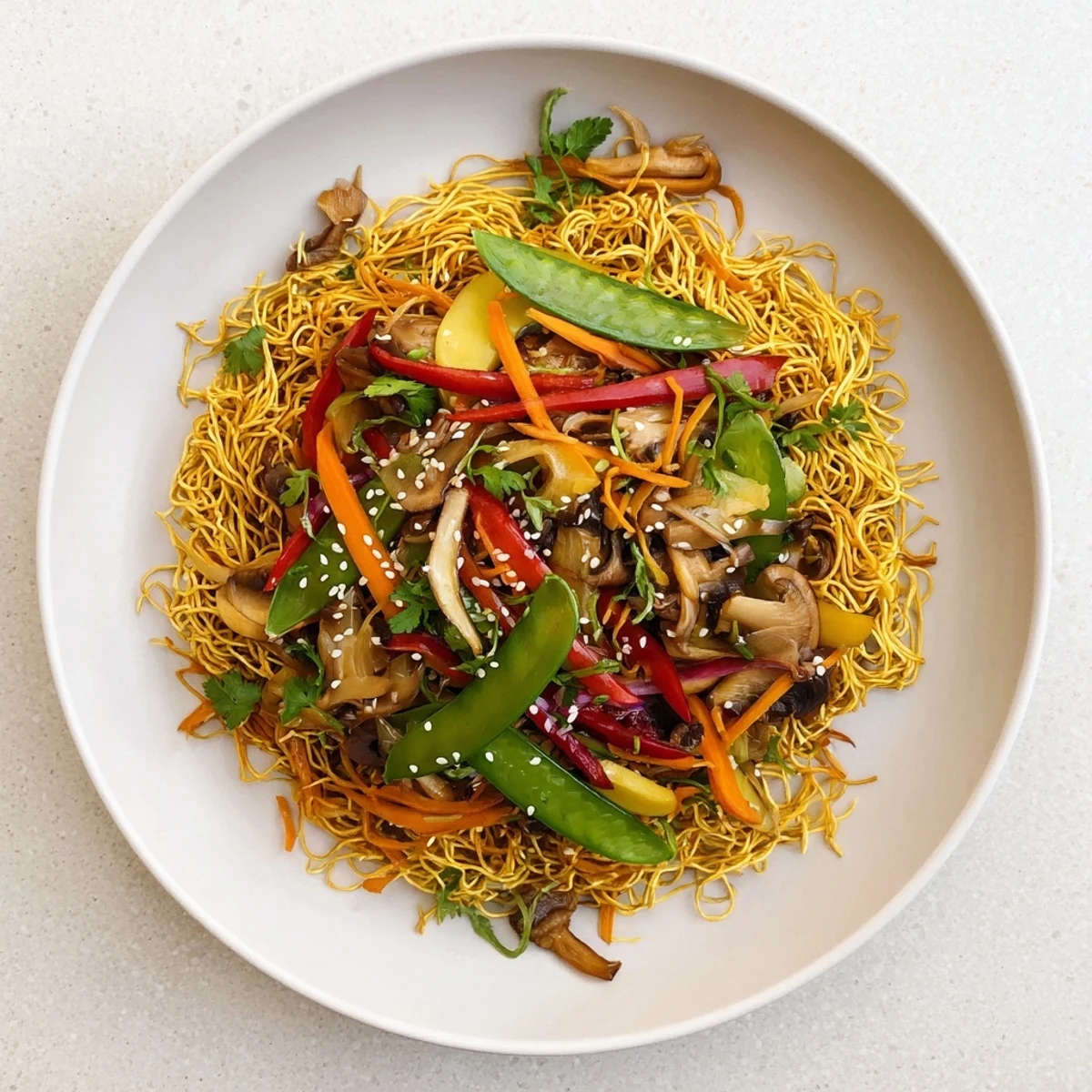
Save This dish transforms simple chow mein noodles into golden crispy perfection, then crowns them with a colorful medley of stir-fried vegetables. The savory sauce balances soy, hoisin, and sesame flavors, coating each bite perfectly. Ready in under an hour, this vegetarian main offers satisfying crunch and fresh textures that make weeknight dinners feel special.
The crackle of noodles hitting hot oil still makes my kitchen feel like a tiny corner of Hong Kong. I discovered this technique during a rainy Tuesday when takeout felt impossible but cravings refused to be ignored. Now the sound of vegetables hitting the wok signals comfort food night in our house, and my partner has learned to come running when that first crisp forms in the pan.
Last winter my sister called, defeated by another failed delivery attempt during a snowstorm. I talked her through this recipe over the phone, and something about hearing vegetables sizzle through the speaker made both of us feel less isolated. She made it for her family that night and sent me a photo of empty plates.
Ingredients
- 200 g dried chow mein noodles: These thin noodles crisp up beautifully and hold their texture even under the sauce
- 2 tbsp vegetable oil: Split between frying noodles and stir-frying vegetables for that perfect golden finish
- 1 medium red bell pepper: Adds sweetness and that restaurant-worthy pop of color
- 1 medium carrot: Julienned thin so they cook quickly but keep their satisfying crunch
- 100 g snow peas: Their natural sweetness balances the salty sauce perfectly
- 100 g shiitake or button mushrooms: Earthy umami that makes this feel substantial even without meat
- 1 small yellow onion: The foundation that carries all the other flavors
- 1 cup bean sprouts: Added at the very end for fresh crispness that cuts through the rich sauce
- 2 spring onions: Half cooked into the vegetables, half sprinkled fresh on top
- 3 tbsp soy sauce: The salty backbone of our sauce
- 1 tbsp oyster sauce: Adds depth and slight sweetness that makes this taste authentic
- 1 tbsp hoisin sauce: Gives that gorgeous glossy finish and complex flavor
- 1 tbsp sesame oil: A little goes a long way for that nutty aromatic finish
- 1 tsp sugar: Balances the salty elements and helps vegetables caramelize slightly
- 2 cloves garlic: Fresh minced makes all the difference compared to jarred
- 1 tsp fresh ginger: Grated fresh brings warmth that dried ginger never achieves
- 1 tsp cornstarch: The secret to that restaurant-style glossy coating on every vegetable
Instructions
- Cook the noodles perfectly:
- Boil according to package directions then rinse immediately under cold water to stop cooking and prevent sticking
- Create the crispy foundation:
- Heat 1 tablespoon oil in a large nonstick skillet over medium-high heat then spread noodles in an even layer and let them fry undisturbed for 4 to 5 minutes until deeply golden and crisp before carefully flipping
- Whisk the sauce:
- Combine soy sauce, oyster sauce, hoisin sauce, sesame oil, sugar, garlic, ginger, water, and cornstarch in a small bowl until smooth
- Stir-fry the vegetables:
- Heat remaining oil over high heat then add onions and carrots for 2 minutes before adding bell pepper, mushrooms, and snow peas for another 3 to 4 minutes until tender but still vibrant
- Bring it together:
- Pour sauce over vegetables and stir constantly until thickened then add bean sprouts and half the spring onions just until combined
- Plate it beautifully:
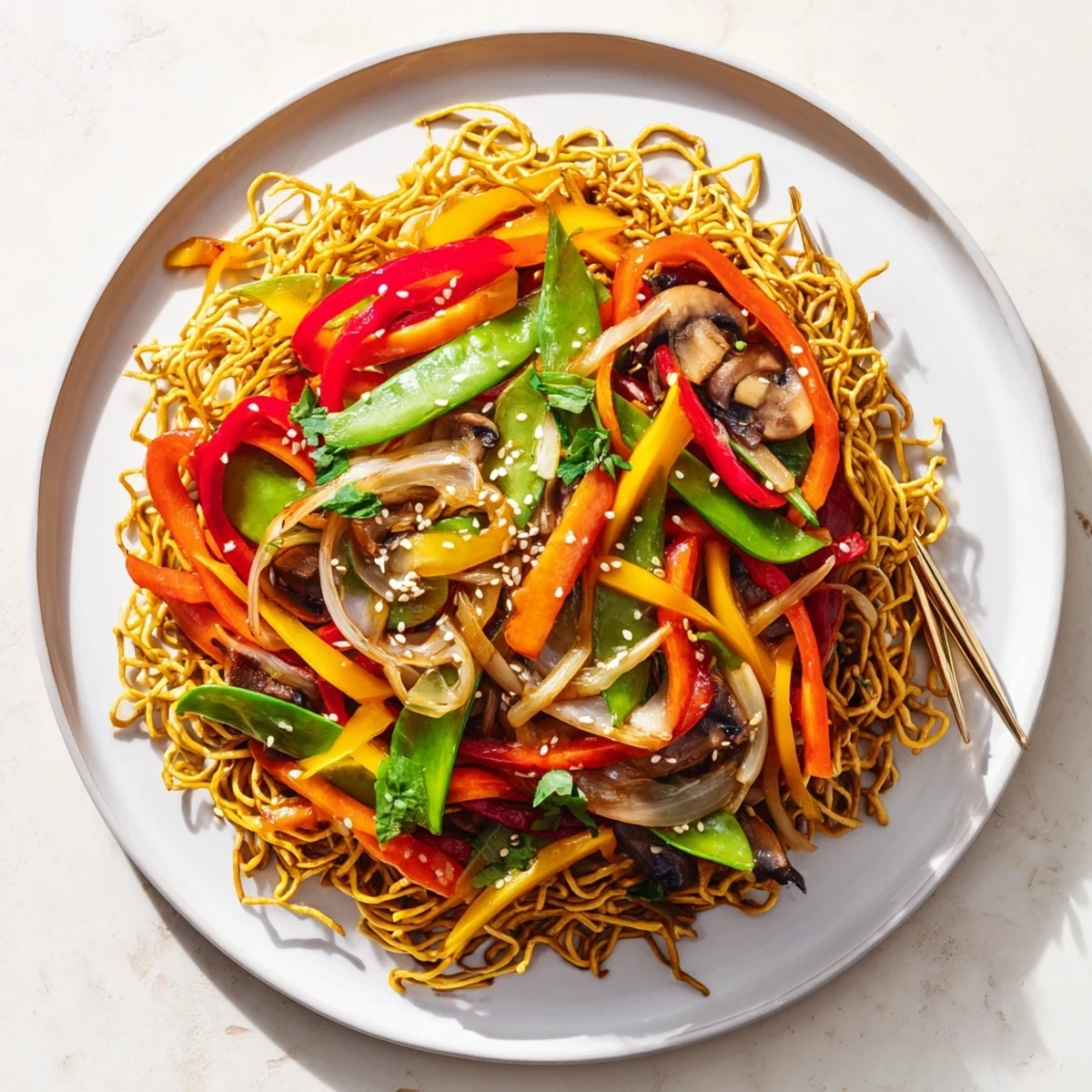
- Arrange crispy noodles on a platter and spoon the sauced vegetables over the top then garnish with remaining spring onions, sesame seeds, and fresh coriander
 Save
Save This recipe became our go-to celebration dinner after my roommate got her dream job. We gathered around the platter with chopsticks, sharing stories and letting the crispy noodles soak up sauce as we talked late into the night. Food tastes better when someone else is happy.
Making It Your Own
Sometimes I add sliced bamboo shoots or water chestnuts when I want extra crunch. The vegetables listed here are classic but the technique works with whatever looks fresh at the market.
Perfecting The Crisp
The key is letting noodles form a golden crust before flipping. I learned this the hard way after impatient attempts resulted in sad soggy noodles that never achieved restaurant quality.
Sauce Secrets
Always whisk cornstarch into cold liquid before adding to the hot pan. This prevents lumpy sauce and ensures every vegetable gets that gorgeous glossy coating.
- Double the sauce if you love extra coating on your noodles
- Add chili paste or fresh sliced chilies for heat
- Prep all ingredients before turning on the stove
 Save
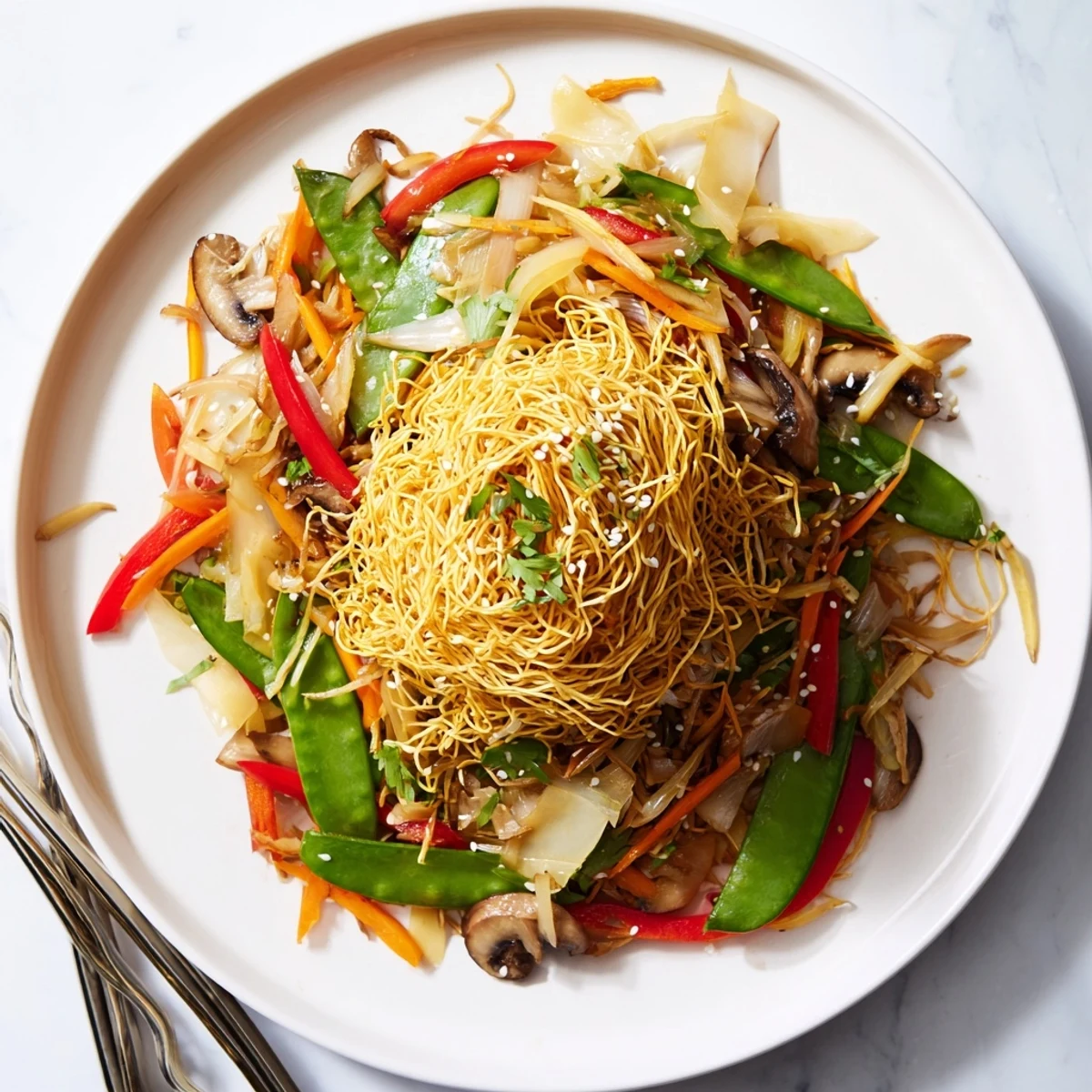
Save Gather your favorite people and enjoy the satisfaction of creating something that looks and tastes like it came from a professional kitchen. Your weeknight dinners just got a whole lot more exciting.
Common Recipe Questions
- → How do I get the noodles really crispy?
-
Fry the cooked noodles in a hot nonstick skillet without disturbing them for 4–5 minutes. Let them form a golden crust before flipping. Avoid overcrowding the pan, and use enough oil to coat the surface evenly.
- → Can I make this dish ahead of time?
-
Prepare the sauce and chop vegetables in advance, but fry the noodles just before serving for optimal crispiness. Reheating softened vegetables works well, but the crispy texture is best when freshly made.
- → What vegetables work best in this dish?
-
Bell peppers, carrots, snow peas, mushrooms, and bean sprouts provide great texture and color variety. You can also add bok choy, baby corn, broccoli florets, or snap peas depending on what's in season.
- → Is this dish gluten-free?
-
Traditional chow mein contains gluten, but you can substitute with rice noodles and use tamari instead of soy sauce. Always check labels on hoisin and oyster sauces, as many contain wheat-based thickeners.
- → How can I add more protein?
-
Crispy tofu cubes, pan-fried tempeh strips, or edamame make excellent vegetarian additions. For non-vegetarian options, sliced chicken, shrimp, or thin beef strips stir-fry well with the vegetables.
- → Why rinse noodles after cooking?
-
Rinsing with cold water stops the cooking process and removes excess starch. This prevents noodles from sticking together and helps them crisp up better when frying later.