
 Save
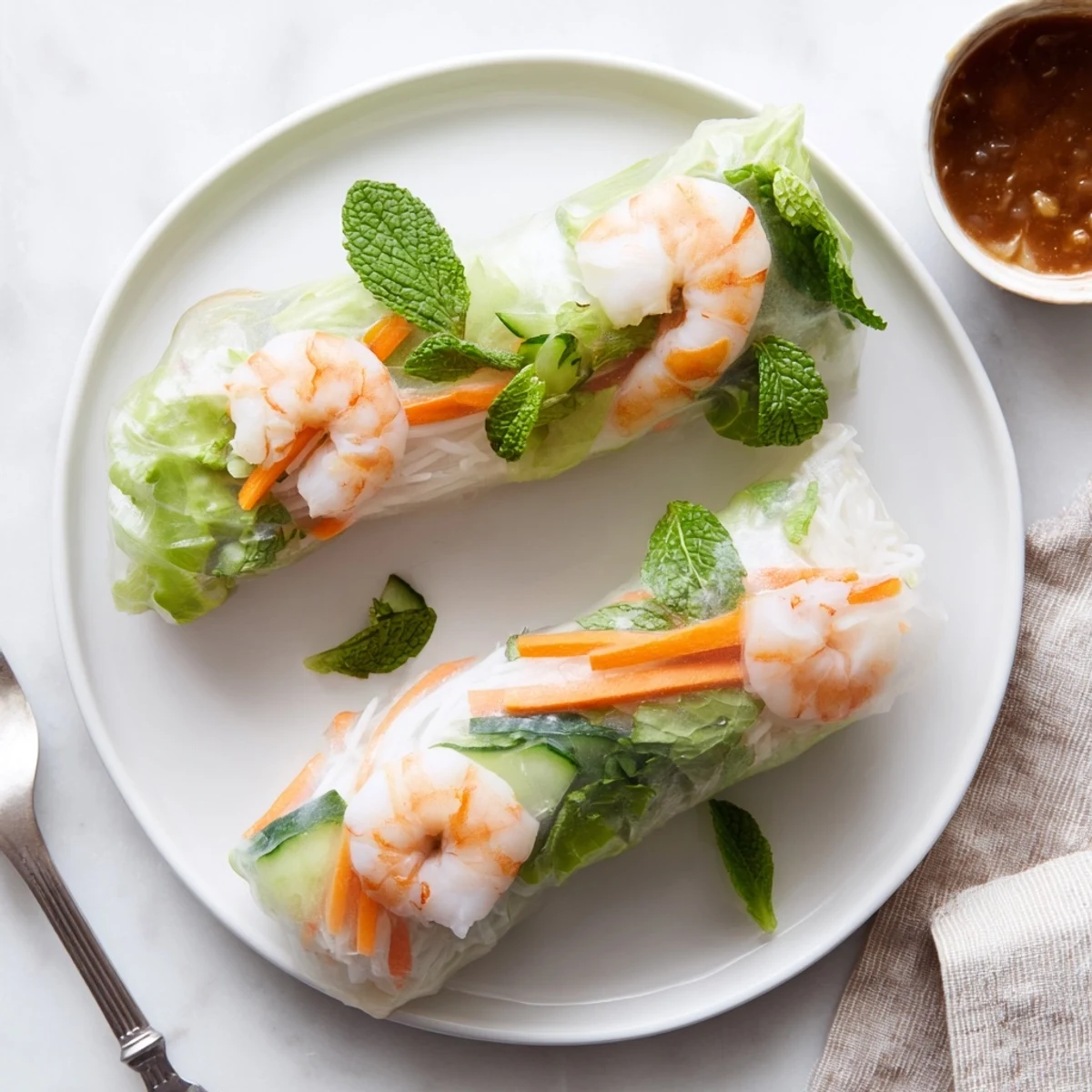
Save These vibrant Vietnamese rolls feature delicate rice paper wrapped around crisp julienned vegetables, aromatic fresh herbs, and tender shrimp. The refreshing combination of textures creates perfect bite-sized portions, while the accompanying creamy peanut sauce adds rich depth with hints of hoisin and lime.
Ready in just 40 minutes, these handheld treats make excellent appetizers or light meals. The rice paper becomes pliable when dipped in warm water, allowing you to roll ingredients tightly while keeping vegetables crunchy and fresh.
The first time I attempted Vietnamese spring rolls, my kitchen counter looked like a vegetable explosion gone wrong. I had rice paper stuck to my arms, mint leaves scattered across the floor, and a dipping sauce that refused to smooth out no matter how much I whisked. But that first imperfect bite, with its crunch of cucumber and the hit of fresh herbs, convinced me these rolls were worth mastering. Now they are my go-to when I want something that feels light but still completely satisfying.
Last summer, I made these for a backyard dinner party and watched my normally vegetable skeptical cousin reach for a third roll. The beauty of these spring rolls is how they transform simple ingredients into something extraordinary through texture and that incredible peanut sauce. They have become my secret weapon for warm weather entertaining when I want to serve something impressive without turning on the oven.
Ingredients
- Rice paper wrappers: These delicate rounds soften instantly in warm water, so work quickly but gently once they are pliable
- Rice vermicelli noodles: Soak them until tender but still slightly toothy, then rinse with cold water to stop the cooking
- Cooked shrimp: Halving them lengthwise shows off their pretty pink color inside the translucent wrapper
- Julienned carrot and cucumber: Keep the strips thin and uniform so they roll neatly without tearing the paper
- Butter lettuce: The sturdy leaves provide structure while adding a fresh crunch that balances the soft noodles
- Fresh mint, cilantro, and Thai basil: The herb trio is non negotiable, it is what makes these taste authentically Vietnamese
- Peanut butter: Smooth creates a velvety sauce but crunchy adds texture, choose based on your preference
- Hoisin and soy sauce: These create the salty sweet foundation that defines the dipping sauce
- Lime juice: Brightens the rich peanut sauce and cuts through the creaminess
- Sriracha: Even a half teaspoon transforms the sauce from good to absolutely addictive
Instructions
- Prepare the noodles:
- Soak the rice vermicelli in hot water for 5 to 7 minutes until soft, then drain and rinse with cold water to stop the cooking process
- Mise en place everything:
- Arrange all your prepared ingredients in separate bowls on the work surface, having everything within arms reach makes the rolling process so much smoother
- Soften the rice paper:
- Dip one wrapper into warm water for 5 to 8 seconds until it is pliable but not completely limp, then lay it flat on a damp towel
- Layer the filling:
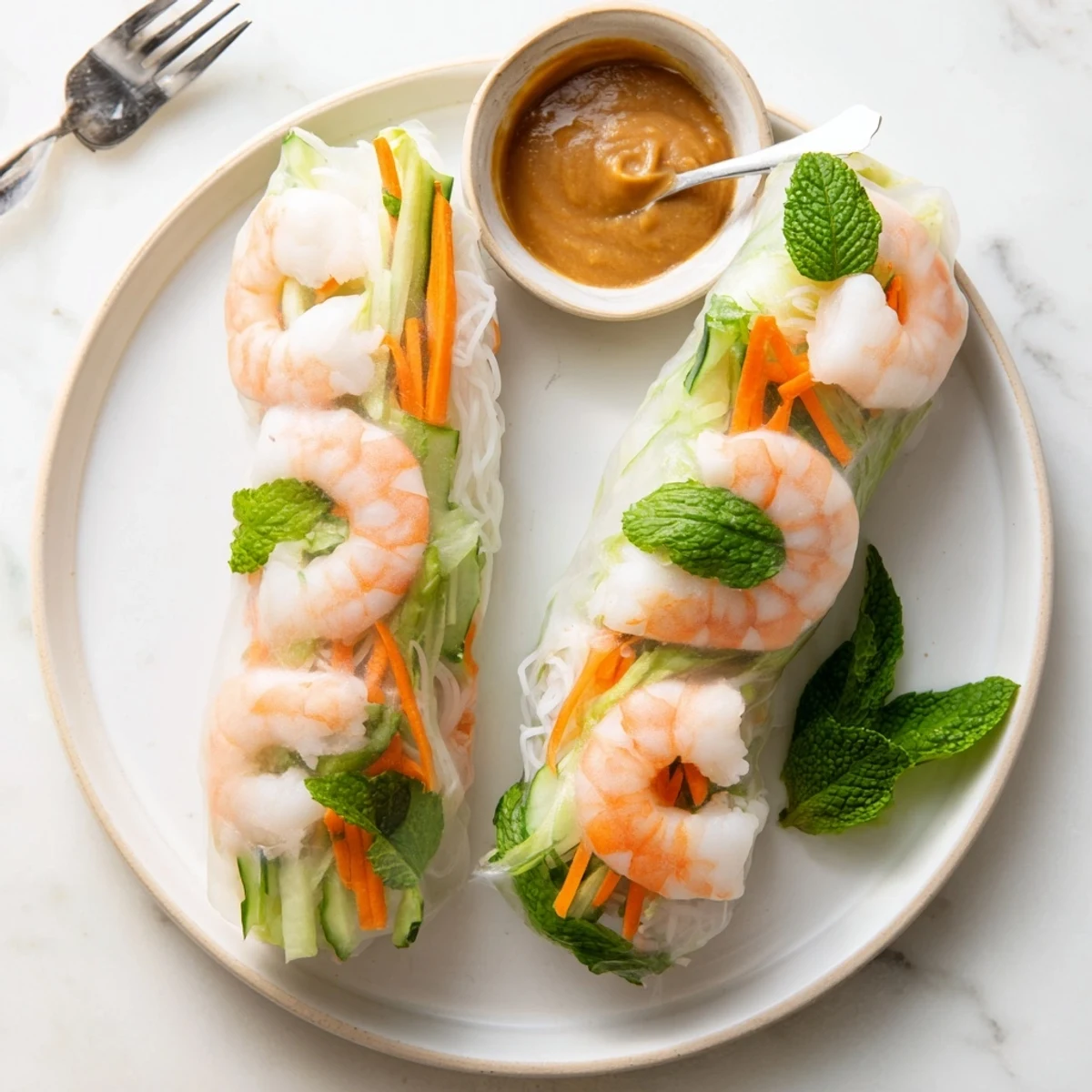
- Place lettuce, noodles, carrot, cucumber, and herbs on the lower third of the wrapper, then top with shrimp halves cut side up for that restaurant style presentation
- Roll it tight:
- Fold the bottom over the filling, fold in both sides, then roll tightly but gently, sealing the edge with a light press
- Whisk the sauce:
- Combine peanut butter, hoisin, soy sauce, lime juice, sriracha, and warm water in a bowl, whisking until smooth and creamy
 Save
Save My friend Linh taught me to place the shrimp cut side up so the pink shows through the translucent wrapper. It is such a small detail that makes these rolls look absolutely stunning on a platter.
Perfecting Your Rolling Technique
The biggest learning curve with spring rolls is getting the tension right. Roll too loosely and they fall apart, too tightly and the rice paper tears. After making dozens of these, I have found that keeping my palms flat and using my fingers to tuck the filling as I roll gives me the most consistent results every time.
Customizing Your Fillings
Once you master the basic technique, these rolls become a canvas for whatever looks fresh at the market. Thinly sliced bell peppers add crunch, mango brings sweetness, and avocado makes them feel more substantial. The key is keeping all the fillings cut to similar sizes so nothing creates a bulge that might tear the delicate wrapper.
Make Ahead Strategy
Spring rolls are best eaten immediately, but I have learned how to prep them in advance without sacrificing quality. The trick is keeping them tightly wrapped with barely damp paper towels, then covering the whole plate with plastic wrap. They stay fresh for about two hours, which gives you plenty of time to get everything ready before guests arrive.
- Place rolled spring rolls in a single layer without touching
- Cover with a barely damp paper towel before wrapping in plastic
- Bring the sauce to room temperature while the rolls sit
 Save
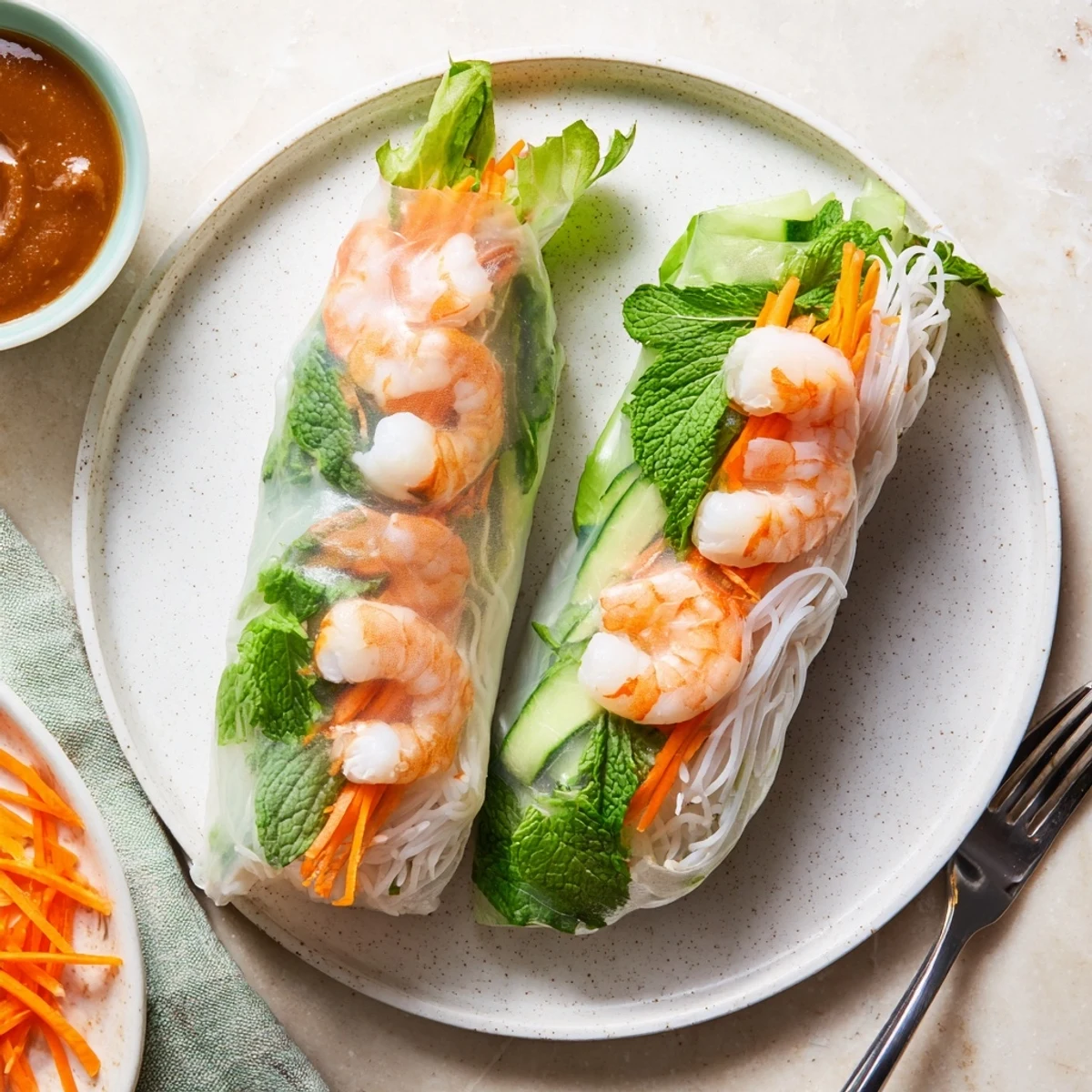
Save There is something so satisfying about food you eat with your hands, and these spring rolls turn every meal into a small occasion.
Common Recipe Questions
- → What protein options work best in Vietnamese spring rolls?
-
Shrimp is traditional, offering a sweet, delicate flavor that complements fresh vegetables. Cooked chicken breast provides a leaner alternative, while firm tofu creates excellent vegetarian options. Poached or grilled shrimp work equally well—just ensure they're fully cooked and sliced lengthwise for easy rolling.
- → How do I prevent rice paper from tearing?
-
Soak wrappers briefly in warm water for 5–8 seconds until slightly pliable but still slightly firm. Over-soaking causes tearing. Work on a damp towel to prevent sticking, and roll gently but firmly. If edges feel too dry, lightly brush with water using your fingertips.
- → Can Vietnamese spring rolls be made ahead?
-
These are best served immediately within 2 hours of preparation. Rice paper dries out and becomes tough over time. If making ahead, cover tightly with damp paper towels and plastic wrap, refrigerating for no more than 2 hours. The peanut sauce can be prepared up to 3 days in advance and stored refrigerated.
- → What vegetables work well in spring rolls?
-
Classic additions include julienned carrots, cucumber with seeds removed, and butter or romaine lettuce. For variety, try thinly sliced bell peppers, avocado strips, shredded cabbage, or fresh mango for sweetness. The key is cutting vegetables into thin, uniform strips for even rolling.
- → How do I adjust the peanut dipping sauce consistency?
-
Start with the base ingredients, then gradually add warm water one tablespoon at a time until reaching desired thickness. For a thinner dipping consistency, add more water. If sauce becomes too thin, incorporate additional peanut butter. The sauce should coat a spoon thickly while still being pourable.
- → Are Vietnamese spring rolls gluten-free?
-
Traditional Vietnamese spring rolls are naturally gluten-free when made with rice paper wrappers and rice vermicelli noodles. Ensure your soy sauce is labeled gluten-free or substitute with tamari. Check hoisin sauce labels carefully, as some brands contain wheat-based thickeners. The remaining ingredients are naturally gluten-free.